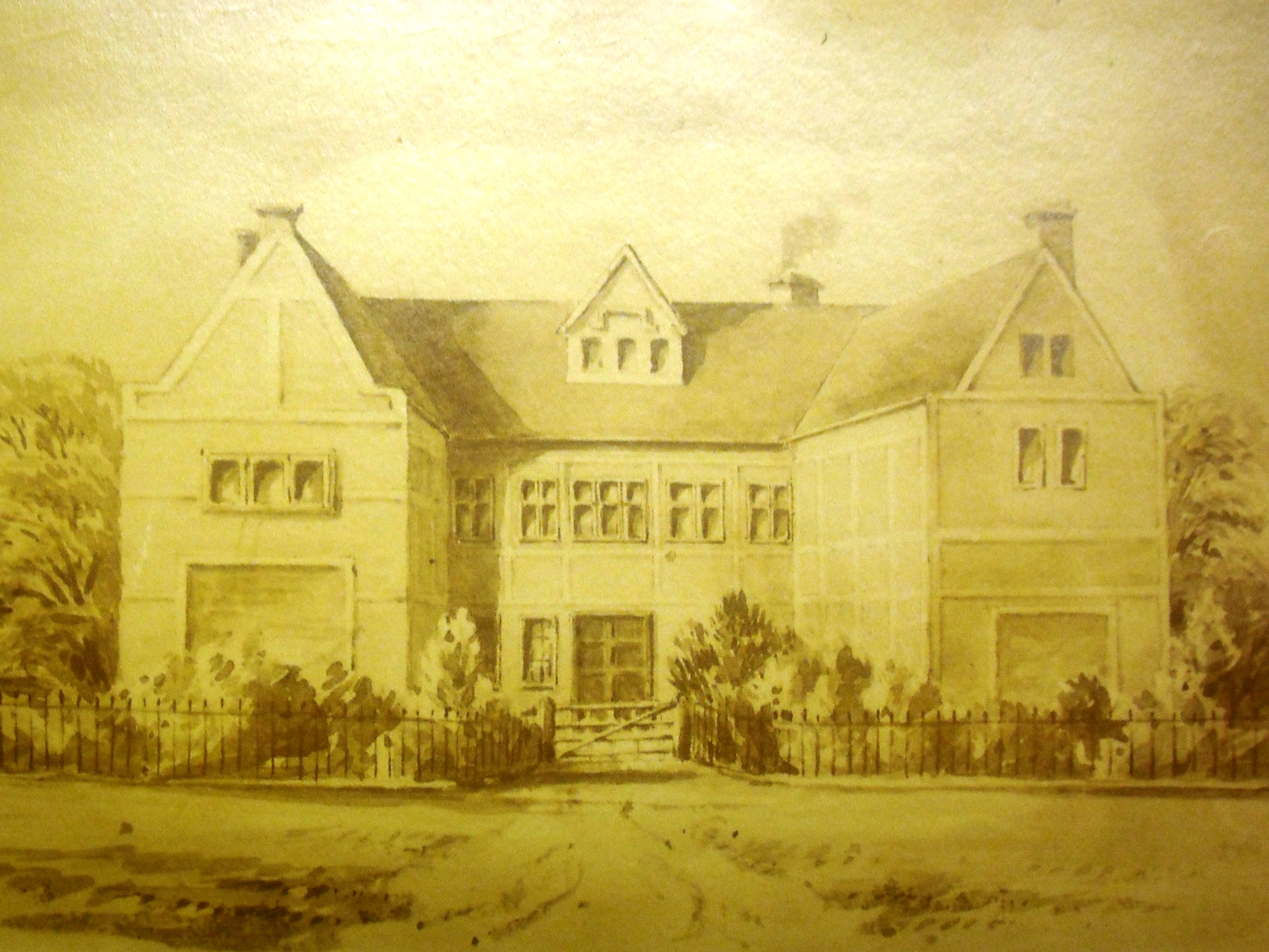
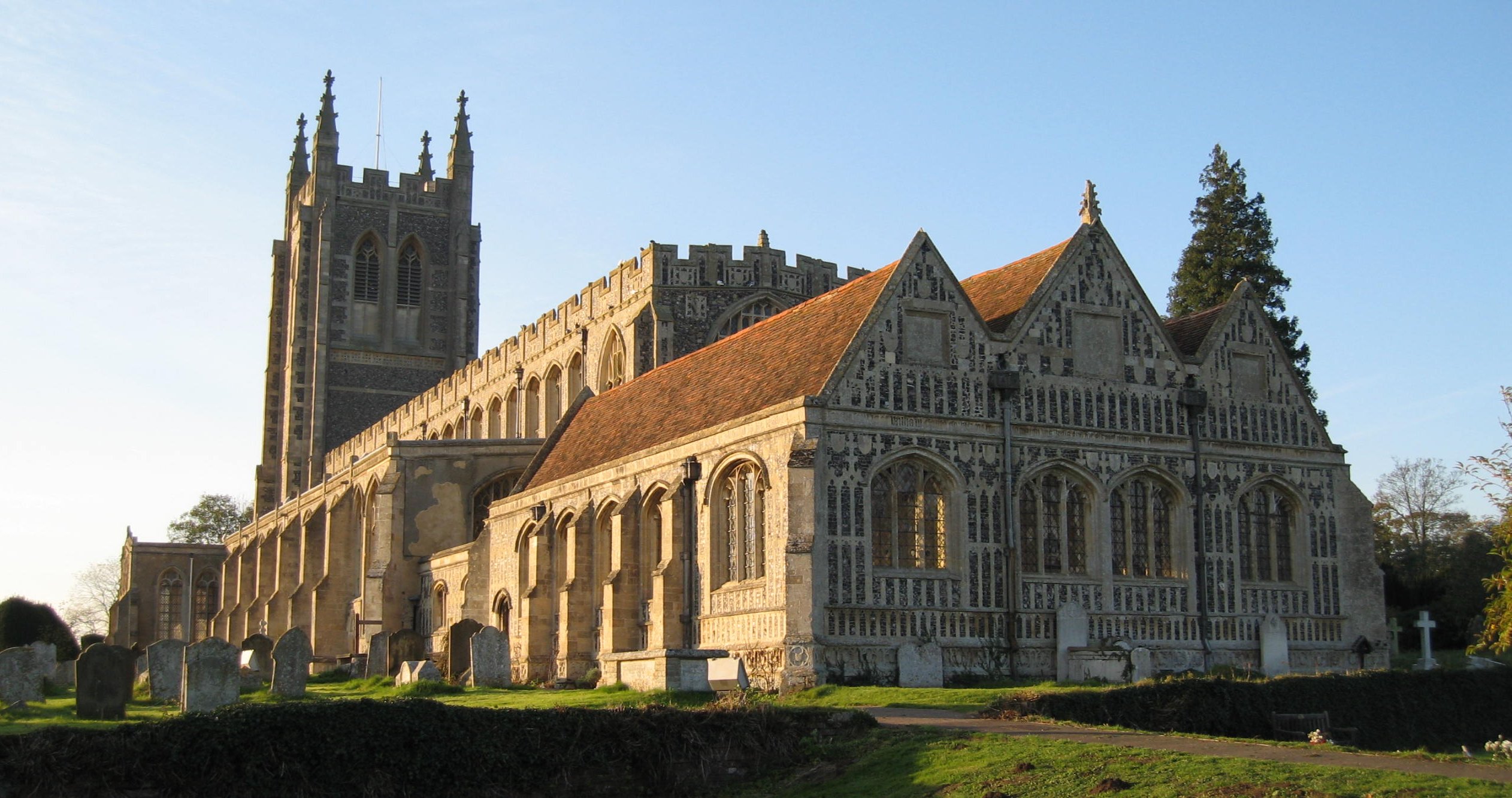
Of all Suffolk recusants, Roger Martin of Long Melford (c. 1527-1615) is perhaps the best known. Martin emerged from the historical shadows in 1989 when David Dymond and Clive Paine published an edition of Martin’s remarkable account of the ceremonies and furnishings of Holy Trinity, Long Melford, ‘The state of Melford Church … as I did know it’. It certainly helped the popularity of Dymond and Paine’s volume that Holy Trinity, Long Melford is one of the most architecturally spectacular churches in Suffolk, but it also coincided closely with the publication of Eamon Duffy’s Stripping of the Altars and the subsequent resurgence in the study of the English church on the eve of the Reformation. Martin’s ‘State of Melford Church’ is now recognised as one of the most important and detailed sources on the experience of the pre-Reformation worshipper.
I first encountered Roger Martin when I was studying A Level History – it is a great privilege, therefore, to be in a position to announce to the world that I may have discovered his personal prayer book. My article ‘Early Modern English Catholic Piety in a Fifteenth-Century Book of Hours: Cambridge University Library MS Additional 10079’ appears in the 2015 number of Transactions of the Cambridge Bibliographical Society and advances the argument that the manuscript I have dubbed the Rookwood Book of Hours originally belonged to Roger Martin. I spotted the Rookwood Book of Hours for sale at Sotheby’s in November 2014 and persuaded Cambridge University Library to buy it for £13,750 – for which I shall be eternally grateful to the UL. At the time, I argued that the manuscript was important because it was the only manuscript known to survive from the eighteenth-century library of the Rookwood family. The catalogue of this important recusant library forms part of my edition of the Rookwood Family Papers to be published later this year by the Suffolk Records Society.
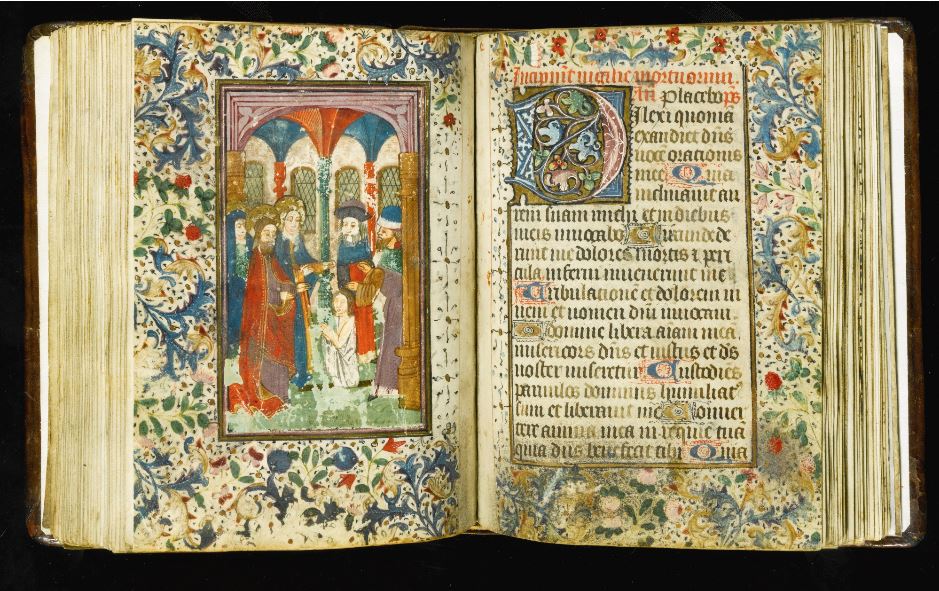
It was only when I inspected the Rookwood Book of Hours for the first time, in January 2015, that I began to suspect that the manuscript’s older provenance lay with the Martin family of Long Melford rather than the Rookwoods of Stanningfield. The book of hours undoubtedly belonged to Thomas Rookwood of Stanningfield in 1726, but the name ‘martyn’ appears in fifteenth-century script at the front of the book. This I believe to be the autograph of Roger Martin’s great grandfather Richard Martin, a cloth merchant who probably purchased (or commissioned) the book of hours from the Low Countries in the 1460s. The Rookwoods acquired a good deal of property from the Martin family in the early eighteenth century (Thomas Rookwood married Tamworth Martin) and it is likely that the book of hours came into the Rookwoods’ possession at this point as well. However, the most remarkable feature of the manuscript is not contained in the book of hours itself but takes the form of accessory material in a sixteenth-century italic hand. I was eventually able to identify these prayers as having been copied from a series of preces privatae by Erasmus. I was also able to date the prayers to the period 1553-58 and probably November 1558, as there appears to be a reference to the last illness of Queen Mary I.
In Mary’s reign Roger Martin was the pre-eminent resident of Long Melford, a churchwarden in charge of restoring Holy Trinity to Catholic splendour and a man who had been offered a place in Mary’s Privy Council (which he turned down). The likelihood that the book of hours belonged to the Martin family in the fifteenth century, combined with the appearance of the name ‘Roogers’ elsewhere in the manuscript (which I interpret as ‘Roger’s’) as well as Roger Martin’s known learning (he trained as a barrister at Lincoln’s Inn) and interest in preserving pre-Reformation objects make for a compelling circumstantial case that CUL MS Add. 10079, the ‘Rookwood Book of Hours’, was Roger Martin’s private prayer book. If true, this would make the manuscript the first book known to have belonged to Martin, and an important part of Long Melford’s and Suffolk’s religious history. Fortunately, the prayer book will now be preserved by Cambridge University Library for generations of future scholars to study and reach their own conclusions.


Leave a reply to Keith Slater Cancel reply