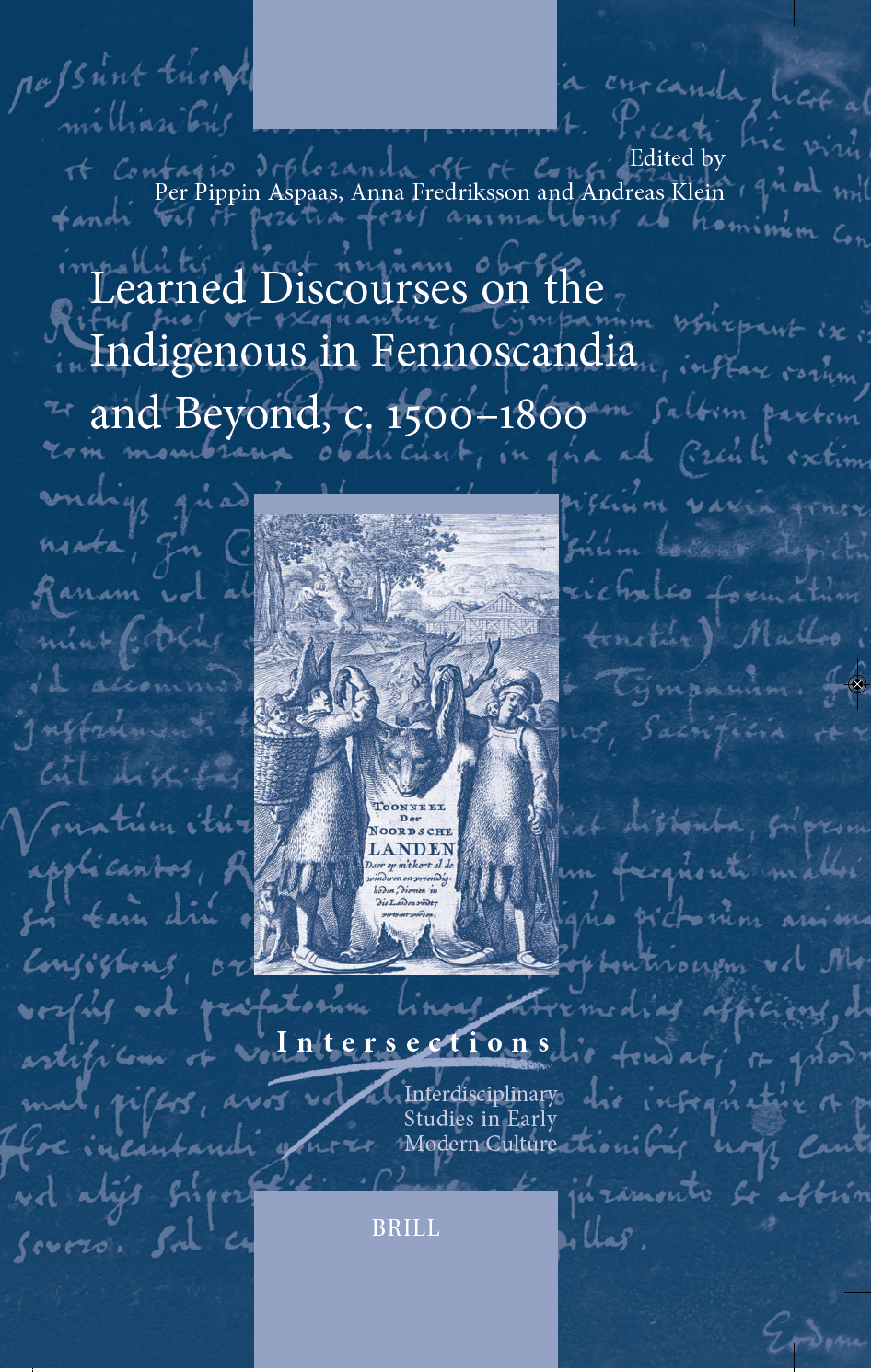
My chapter ‘Competing Ethnographies of the Pagan Baltic: Colonial and Non-Colonial Constructions of Indigenous Religion’ has just been published in the volume Learned Discourses on the Indigenous in Fennoscandia and Beyond, c. 1500–1800, edited by Per Pippin Aspaas, Andreas Klein and Anna Fredriksson. The volume is based on papers delivered at the 2023 Schefferus Conference at the Arctic University of Norway in 2023, where I spoke on the subject of ethnographers’ approaches to Baltic religion. The chapter argues that two distinct traditions of interpreting pre-Christian religion in the Baltic emerged among ‘German’ (broadly speaking) and ‘Polish’ (broadly speaking) commentators, with the latter taking a generally negative view rooted in the traditions of the Teutonic Order while the latter adopted a less negative, neutral or even positive view of pre-Christian religious traditions. Lithuania was unusual in being a nation that retained an unchristianised minority but did not experience colonisation as a political phenomenon in the early modern period, in contrast to other regions in the Baltic and Sápmi in Fennoscandia; this established a unique relationship between Christian Lithuanians and their still unchristianised fellow citizens which is explored in the chapter.

Leave a Reply