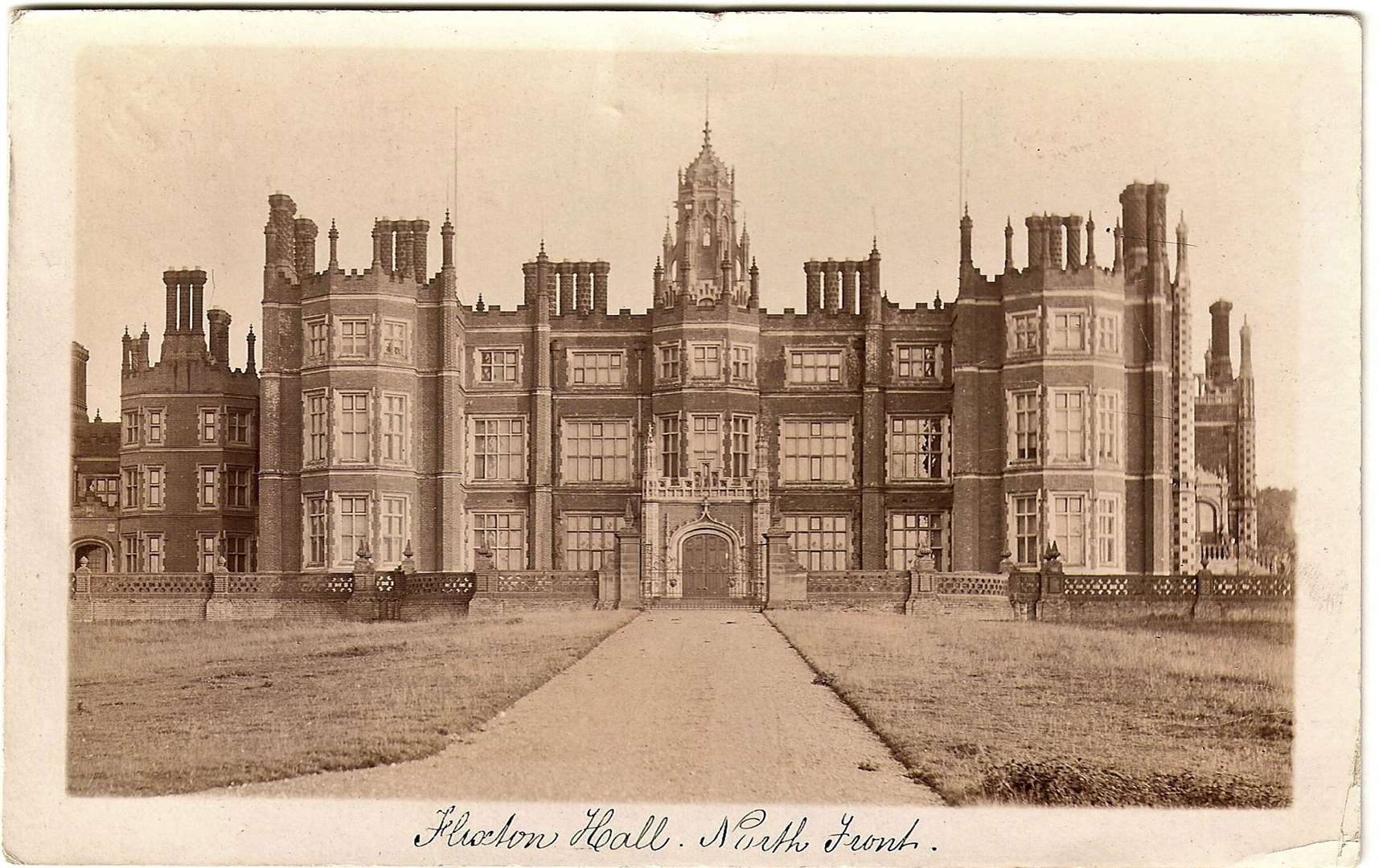
This afternoon I participated in a workshop at UCL organised by Dr Kendra Packham and Prof. Alison Shell entitled ‘Approaching Emancipation: New Perspectives on England’s Catholic Minorities and the Long Eighteenth Century’ – part of the celebrations of UCL’s bicentenary year. I presented a paper entitled ‘“Many terrible instances of the just judgment of God”: The Strange Death of Humphrey Burgoyne and Providences in the Eighteenth-Century Catholic Community’. The paper focussed on an incident that occurred at Flixton Hall in Suffolk in 1735, when the Catholic Tasburgh family noticed a strangely-shaped stain appear on a mahogany slider for bottles while dining. The Tasburghs recognised the outline of their wine merchant, Humphrey Burgoyne, who at the moment the stain appeared had been crushed to death by the collapse of a flight of stairs. The story was shared within the Catholic community as a strange providence, with the Tasburghs commissioning an engraving of the phenomenon, while the slider was even taken abroad and displayed to members of the exiled Catholic community over the succeeding decade.
In the paper I argued that belief in an ‘apparition’ like that of Burgoyne put Catholics at odds with prevailing Enlightenment scepticism, yet the slider also became a ‘relic’ rather different from those that Catholics were accustomed to (testifying as it did to the judgement rather than the grace of God); it was at once a distinctive product of Catholic religiosity and belief in Purgatory, and a reminder of the conviviality, gentility and sophistication that rendered the gentry Catholic community an integral part of the wider Georgian aristocracy.

Leave a Reply