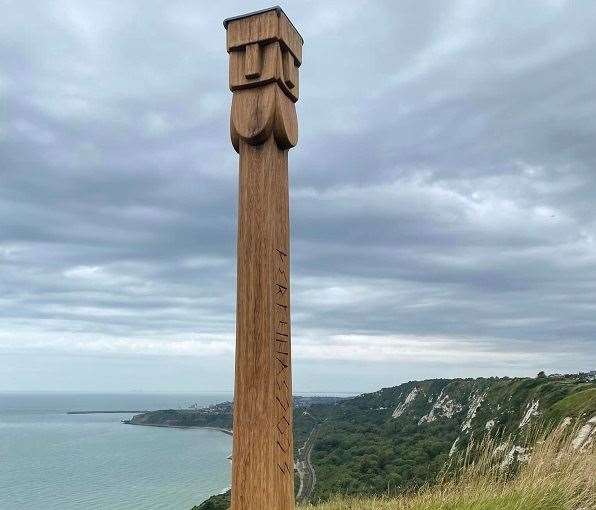
This morning I appeared at the very end of BBC Radio 4’s Today programme to comment on the appearance of a mysterious carved pole on a coastal path in Kent early in August, which it has fallen to me to explain because the pole bears the name PERKUNAS, referring to the Baltic (or, more specifically, Lithuanian) god of thunder. The pole is loosely inspired by the Wolin idol found in Poland, which bears the image of a bearded deity with four faces, presumed to be the Slavic god Svetovit. We do not have any record of what images of the Baltic Perkūnas looked like, so the influence of the Slavic idol is understandable; but in other respects the Kentish image draws on Lithuanian traditions of pole-carving. The most surprising aspect of the pole is, perhaps, its coastal location – along with its sudden and unexplained appearance.
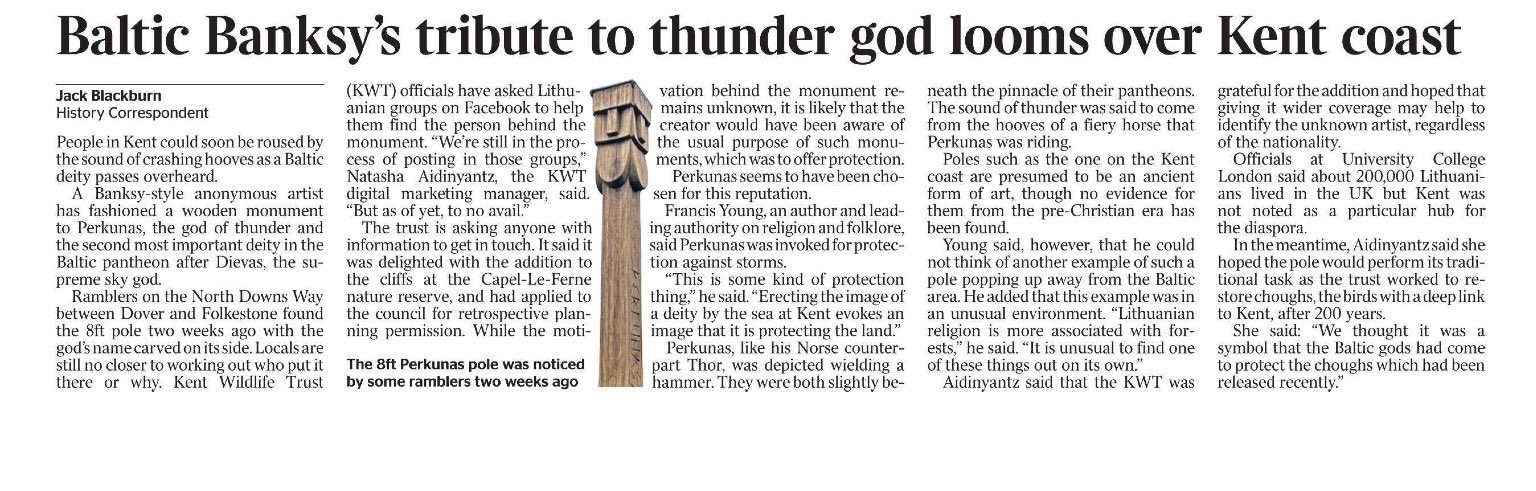
Over the last few days the pole has garnered a considerable degree of media interest, and I have been interviewed by both The Guardian and The Times newspapers as well as Times Radio. I’ve also been approached by ITV News, Sky and Channel 5 about TV interviews, but haven’t been able to do these. I’m certainly surprised that the pole has attracted quite so much attention!


Leave a reply to Publication of ‘Pre-Christian Baltic Religion and Belief’ – Francis Young Cancel reply