Fairies: A History was published by Polity Press in March 2026.
Many people think they know what fairies are, what a fairy looks like, and how a fairy is expected to behave. Francis Young’s new history of fairies demonstrates that the truth about belief in fairies is far stranger than clichéd images of tiny figures with wings and wands.
Before the rise of the ‘small winged fairy’ in the 19th century, the category of fairies included a vast range of supernatural human-like creatures, from the elves of Scandinavia and the aos sí of Ireland to the vilas of the Balkans and the fadas of Iberia. Young traces the ancient origins of belief in such creatures and how it adapted to the rise of Christianity and then flourished in medieval Europe, before being transformed – but not destroyed – by the upheavals of the Reformation, the Enlightenment, and even European colonial expansion, which made fairies a global phenomenon. He concludes this uniquely wide-ranging history by reflecting on the surprising ways in which fairy belief endures in our apparently disenchanted contemporary world.

Silence of the Gods: The Untold History of Europe’s Last Pagan Peoples was published by Cambridge University Press in June 2025.
The formal conversion to Christianity in 1387 of the Grand Duchy of Lithuania seemingly marked the end of Europe’s last ‘pagan’ peoples. But the reality was different. At the margins, often under the radar, around the dusky edgelands, pre-Christian religions endured and indeed continued to flourish for an astonishing five centuries. Silence of the Gods tells, for the first time, the remarkable story of these forgotten peoples: belated adopters of Christian belief on the outer periphery of Christendom, from the Sámi of the frozen north to the Estonians, Latvians and Lithuanians around the Baltic, as well as the Finno-Ugric peoples of Russia’s Volga-Ural Plain. These communities, Dr Young reveals, responded creatively to Christianity’s challenge, but for centuries stopped short of embracing it. His book addresses why this was so, uncovering stories of fierce resistance, unlikely survival and considerable ingenuity. He revolutionises understandings of the lost religions of the last pagans.
Pre-Christian Baltic Religion and Belief will be published by Arc Humanities Press in April 2025.
The Baltic peoples of Prussia, Lithuania, and Latvia were among the last in Europe to be Christianized. In spite of their survival (in some cases) as late as the eighteenth century, the pre-Christian religions of the Baltic are little known beyond the Baltic states. Baltic religions have often been interpreted through the lens of modern reconstructions of mythology based on nineteenth-century folklore collections. This book, by contrast, draws on historical sources contemporaneous with or close in time to the practice of pre-Christian cults. These include the writings of chroniclers and early ethnographers, documents produced by authorities concerned about the continuation of pre-Christian practices, and the evidence of archaeology. Focusing on the deities, sacred places, and sacred rites of the Balts, this book is the first dedicated introduction in English to the religious world of some of Europe’s last pagan peoples.
Poetry and Nation-Building in the Grand Duchy of Lithuania: Three Early Modern Latin Epics was published by Arc Humanities Press in June 2024.
Latin epic poetry flourished in the Grand Duchy of Lithuania between the early sixteenth and late seventeenth centuries, accompanied by the widely accepted belief that the Lithuanian language was a corrupted form of Latin and therefore Latin should be Lithuania’s national language. This edition presents translations of three key epics that reflect the beginnings, maturity and decline of the epic tradition in Lithuania: The Prussian War (1516) by Joannes Vislicensis; The Muscovite Expedition (1582) by Francisczek Gradowski; and The Strength of the Lord’s Right Arm (1674) by James Bennett. Between them, these epics show the creativity and inventiveness of the Lithuanian Latin epic tradition and the involvement of authors from different ethnic backgrounds in creating a national literature for early modern Central Europe’s largest state.
Paganism Persisting: A History of European Paganisms since Antiquity, co-authored with Robin C. Douglas, was published by University of Exeter Press in October 2024.
Paganism in Europe was not defeated by Christianity: it never went away. From the fourth century to the twentieth, against the background of a largely Christian culture, people repeatedly attempted to revive various kinds of pre-Christian religion – beliefs and practices that we have come to label as ‘paganism’.
Ancient paganism did not survive the Middle Ages in its original form; this book tells the story of the persistence of elements of paganism and the pagan idea through Europe’s pagan revivals, from Byzantine Greece to medieval Eastern Europe and Renaissance Florence, from eighteenth-century Norwich to revolutionary Paris and Edwardian England. While some of these revivals are well known and others are almost entirely forgotten, they reveal the rich diversity of interpretations of paganism – and how those interpretations have been conditioned by the surrounding culture.
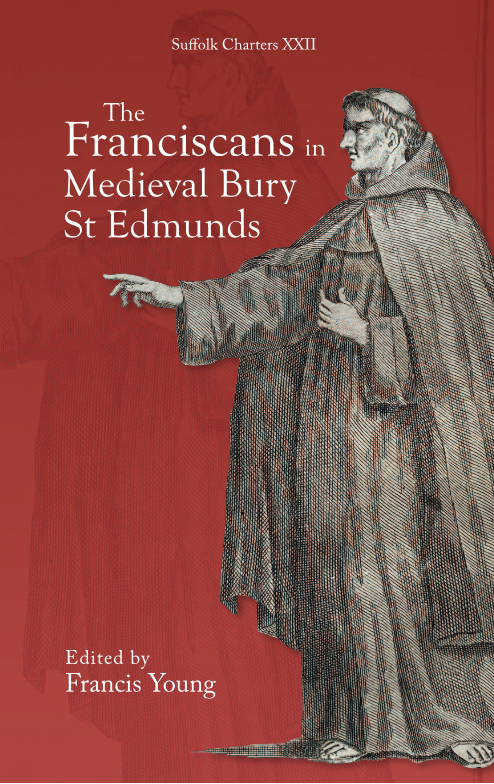
The Franciscans in Medieval Bury St Edmunds was published by Boydell & Brewer for the Suffolk Records Society (Charters Series) in November 2023.
Between 1233 and 1263 Franciscan friars engaged in a fierce confrontation with one of the most powerful abbeys in western Christendom, St Edmunds Abbey. Bringing together the documents that describe the sometimes violent and destructive conflict, which was litigated in both the royal court and the papal curia, this volume traces the history of the Franciscan presence at Bury St Edmunds both before and after the friars established a permanent home at Babwell Fen outside the town’s North Gate in 1265. The controversy created by the arrival of mendicant friars was one of the major religious events of thirteenth-century Europe; the events in Bury are the best evidenced in England, and among the most richly documented mendicant-monastic conflicts in Europe. The volume includes documents produced by the monks of St Edmunds, the royal chancery, the papal curia and the friars themselves, chronicling a mendicant community that continued to challenge and disrupt the authority of the Abbey over Bury St Edmunds.
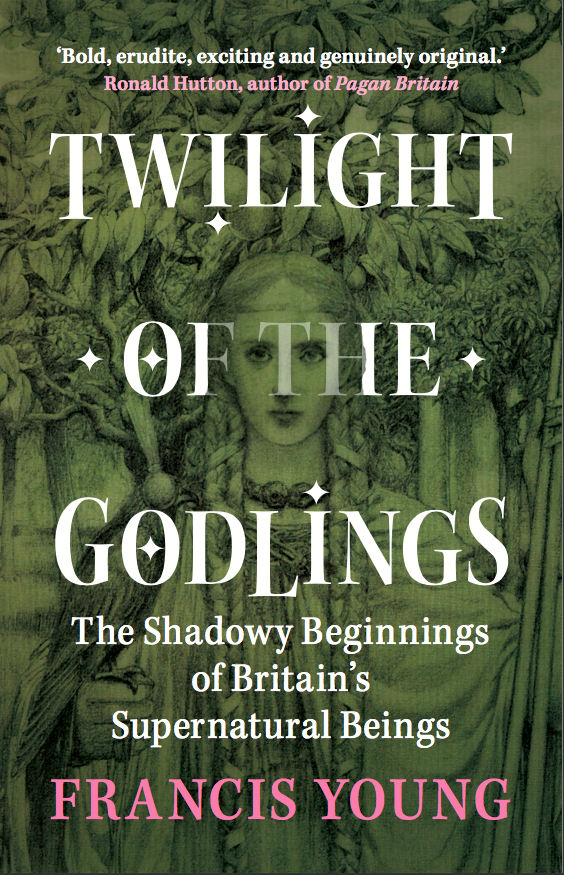
Twilight of the Godlings: The Shadowy Beginnings of Britain’s Supernatural Beings was published by Cambridge University Press on 30 March 2023.
Throughout the recorded history of Britain, belief in earthbound spirits presiding over nature, the home and human destiny has been a feature of successive cultures. From the localised deities of Britannia to the Anglo-Saxons’ elves and the fairies of late medieval England, Britain’s godlings have populated a shadowy, secretive realm of ritual and belief running parallel to authorised religion. Twilight of the Godlings delves deep into the elusive history of these supernatural beings, tracing their evolution from the pre-Roman Iron Age to the end of the Middle Ages. Arguing that accreted cultural assumptions must be cast aside in order to understand the godlings – including the cherished idea that these folkloric creatures are the decayed remnants of pagan gods and goddesses – this bold, revisionist book traces Britain’s ‘small gods’ to a popular religiosity influenced by classical learning. It offers an exciting new way of grasping the island’s most mysterious mythical inhabitants.
Pagans in the Early Modern Baltic: Sixteenth-Century Ethnographic Accounts of Baltic Paganism was published by Arc Humanities Press in April 2022.
The Grand Duchy of Lithuania was the last European polity to renounce paganism and accept the Christian faith, at the end of the fourteenth century. However, the conversion of the Baltic region continued into the early modern period and the ongoing pagan beliefs and practices of Lithuanians and Prussians excited the interest of early ethnographers. This volume brings together Jan Lasicki’s On the Gods of the Samogitians, Jan Malecki’s Little Book on the Sacrifices and Idolatry of the Old Prussians, and other Latin texts on Baltic paganism, none of which have hitherto been translated into English. A critical introduction places these texts, which are of interest far beyond the field of Central European history, in the contexts of early modern ethnography, Baltic history, and Reformation religious polemic.
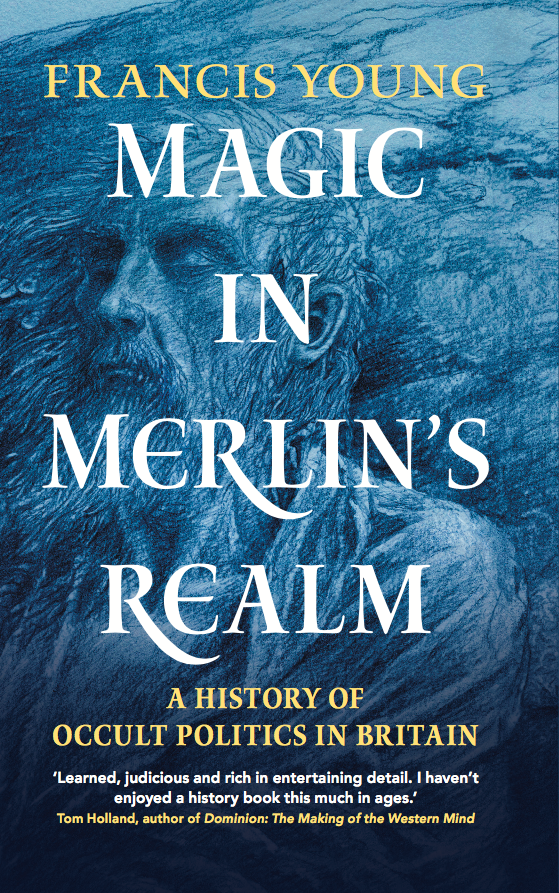
Magic in Merlin’s Realm: A History of Occult Politics in Britain was published by Cambridge University Press in March 2022.
Belief in magic was, until relatively recent times, widespread in Britain; yet the impact of such belief on determinative political events has frequently been overlooked. n his wide-ranging new book, Francis Young explores the role of occult traditions in the history of the island of Great Britain: Merlin’s realm. He argues that while the great magus and artificer invented by Geoffrey of Monmouth was a powerful model for a succession of actual royal magical advisers (including Roger Bacon and John Dee), monarchs nevertheless often lived in fear of hostile sorcery while at other times they even attempted magic themselves. Successive governments were simultaneously fascinated by astrology and alchemy, yet also deeply wary of the possibility of treasonous spellcraft. Whether deployed in warfare, rebellion or propaganda, occult traditions were of central importance to British history and, as the author reveals, these dark arts of magic and politics remain entangled to this day.
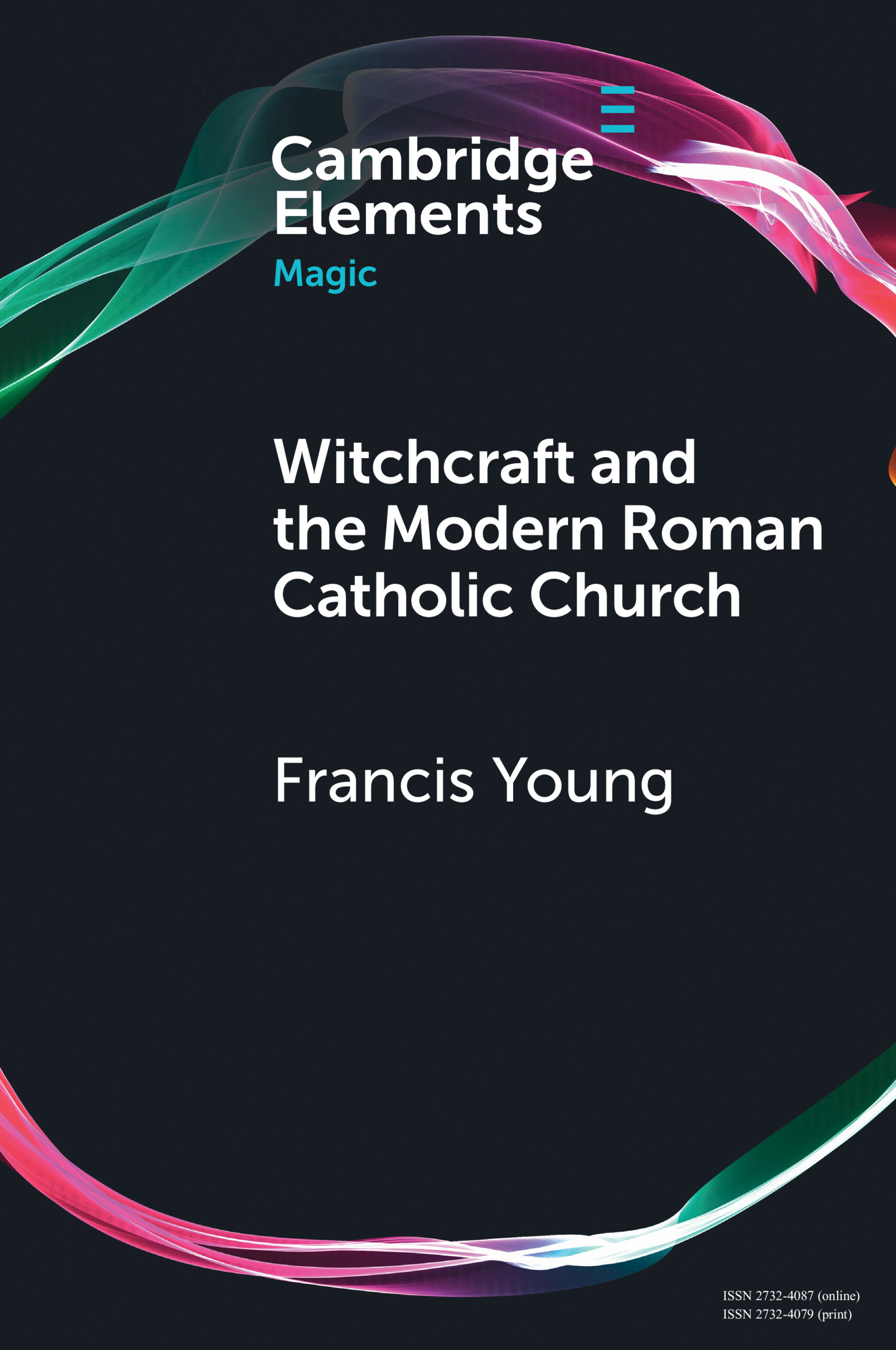
Witchcraft and the Modern Roman Catholic Church was published by Cambridge University Press on 4 January 2022.
Witchcraft is rarely mentioned in official documents of the contemporary Roman Catholic church, but ideas about the dangers of witchcraft and other forms of occultism underpin the recent revival of interest in exorcism in the church. This short book examines hierarchical and clerical understandings of witchcraft within the contemporary Roman Catholic church. The book considers the difficulties faced by clergy in parts of the developing world, where belief in witchcraft is so dominant it has the potential to undermine the church’s doctrine and authority. The book also considers the revival of interest in witchcraft and cursing among Catholic demonologists and exorcists in the developed world. The book explores whether it is possible for a global church to adopt any kind of coherent approach to a phenomenon appraised so differently across different cultures that the church’s responses to witchcraft in one context are likely to seem irrelevant in another.
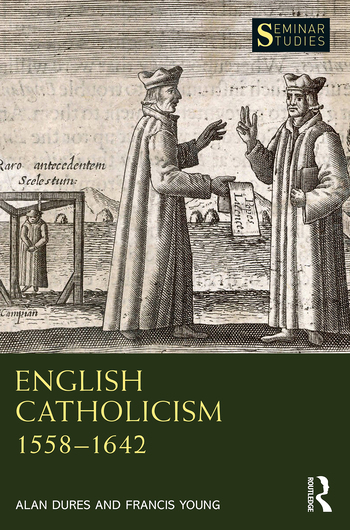
English Catholicism 1558-1642, co-authored with Alan Dures was published by Routledge on 29 October 2021.
The Elizabethan religious settlement of 1559 ostensibly outlawed Catholicism in England, while subsequent events such as the papal excommunication of Elizabeth I, the Spanish Armada, and the Gunpowder Plot led to draconian penalties and persecution. The problem of Catholicism preoccupied every English government between Elizabeth I and Charles I, even if the numbers of Catholics remained small. Nevertheless, a Catholic community not only survived in early modern England but also exerted a surprising degree of influence. Amid intense persecution, expressions of Catholicism ranged from those who refused outright to attend the parish church (recusants) to ‘church papists’ who remained Catholics at heart. English Catholicism 1558–1642 shows that, against all odds, Catholics remained an influential and historically significant minority of religious dissenters in early modern England.
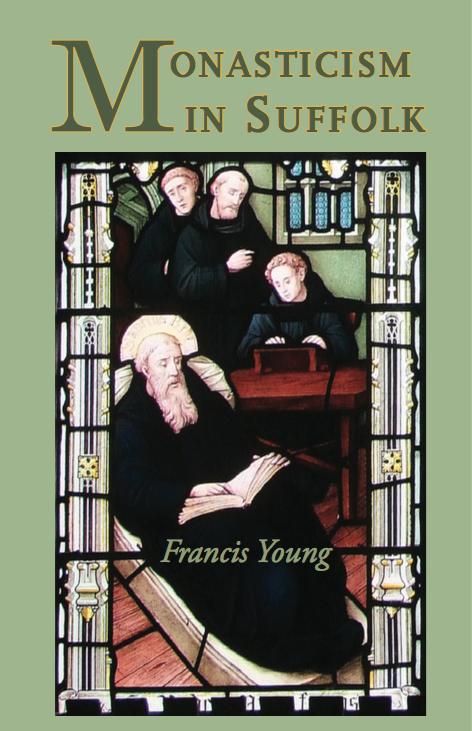
Monasticism in Suffolk was published by Lasse Press in March 2020. [Out of print]
Suffolk has been home to monastic communities since St Felix and St Fursey founded the first monasteries in the seventh century, and today the county is home to both awe-inspiring monastic ruins and living communities of men and women devoted to prayer. This first complete survey of the monastic history of Suffolk traces the development of monasticism in the kingdom of East Anglia, its recovery after Viking destruction, and the flourishing of an extraordinary variety of communities in medieval Suffolk, ranging from the immensely powerful Abbey of Bury St Edmunds to tiny friaries and nunneries. The book examines the impact of the dissolution of the monasteries and the survival of the monastic dream, against all odds, in post-Reformation Suffolk. Finally, the book surveys the revival of religious communities in modern Suffolk to the present day, and provides a comprehensive gazeteer of all past and present monasteries in the county.
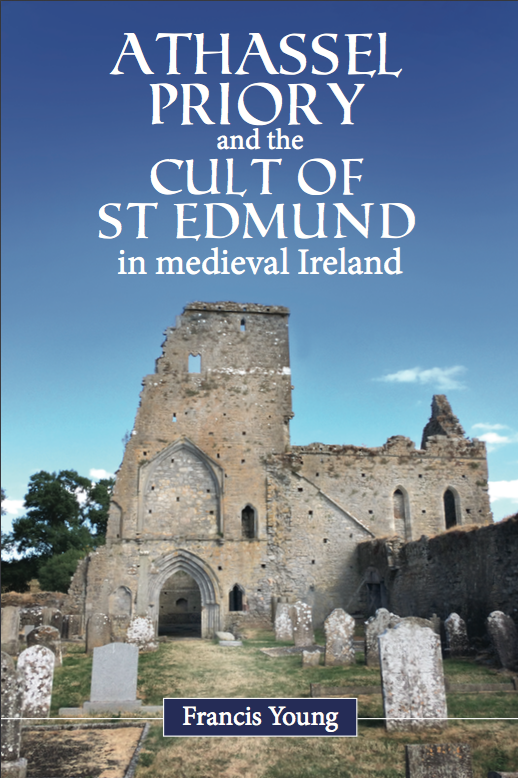
Athassel Priory and the Cult of St Edmund in Medieval Ireland was published by Four Courts Press in February 2020.
The English royal saint Edmund, king and martyr (d. 869) was venerated in Ireland from at least the twelfth century, and Athassel priory in Co. Tipperary was the centre of a cult focussed on a miraculous statue of the saint. This book argues that the veneration of St Edmund and other English saints in Ireland is essential to understanding the complex identity of the ‘English of Ireland’, the descendants of the Anglo-Norman invaders. The history of Athassel priory, a nominally ‘English’ monastery patronized by the Burke dynasty, reflected the changing fortunes of Englishness in late medieval Ireland. Although apparent attempts to make St Edmund an additional patron saint of Ireland in the late Middle Ages proved unsuccessful, the spread of the name Éamon (a gaelicized form of Edmund) in Gaelic Ireland in the fifteenth century has left a lasting legacy of this unusual cult of an English saint in Ireland.
Suffolk Fairylore was published by Lasse Press in November 2018. [Out of print]
From the Green Children of Woolpit to the tale of Tom Tit-Tot (Suffolk’s own version of Rumpelstiltskin), the county of Suffolk is surprisingly rich in lore and legends about fairy realms and hidden inhabitants. The county’s place-names and agricultural customs testify to past belief in elves and fairies, beings that were still feared and held in awe by Suffolk people until the twentieth century. Drawing on medieval chronicles, place-name studies, archaeology, local newspapers and the collections of folklorists, Suffolk Fairylore (the first book to explore the county’s fairy beliefs) offers a detailed account of what Suffolk people believed about the ‘farisees’, and shows that Suffolk is as rich in fairylore as any English county. The book includes a gazeteer of all the places in Suffolk historically associated with the fairies, as well as appendices covering Suffolk’s medieval fairy narratives and the fairytales collected in the county in the Victorian period.
A History of Anglican Exorcism: Deliverance and Demonology in Church Ritual was published by I. B. Tauris in June 2018.
Exorcism is more widespread in contemporary England than perhaps at any other time in history. The Anglican Church is by no means the main provider of this ritual, which predominantly takes place in independent churches. However, every one of the Church of England dioceses in the country now designates at least one member of its clergy to advise on casting out demons. Such `deliverance ministry’ is in theory made available to all those parishioners who desire it. Yet, as Francis Young reveals, present-day exorcism in Anglicanism is an unlikely historical anomaly. It sprang into existence in the 1970s within a church that earlier on had spent whole centuries condemning the expulsion of evil spirits as either Catholic superstition or evangelical excess.
This book for the first time tells the full story of the Anglican Church’s approach to demonology and the exorcist’s ritual since the Reformation in the sixteenth century. The author explains how and why how such a remarkable transformation in the Church’s attitude to the rite of exorcism took place, while also setting his subject against the canvas of the wider history of ideas.
Edmund: In Search of England’s Lost King was published by I. B. Tauris in April 2018.
What buried secret lies beneath the stones of one of England’s greatest former churches and shrines, the Benedictine Abbey of Bury St Edmunds? The search for the final resting place of King Edmund has led to this site, beneath which Francis Young argues the lost king’s remains are waiting to be found.
Edmund: In Search of England’s Lost King explores the history of the martyred monarch of East Anglia and England’s first patron saint, showing how he became a pivotal figure around whom Saxons, Danes and Normans all rallied. Young also examines Edmund’s legacy in the centuries since his death at the hands of marauding Vikings in the 9th century. In doing so, this fascinating book points to the imminent rediscovery of the ruler who created England.
Magic as a Political Crime in Medieval and Early Modern England: A History of Sorcery and Treason was published by I. B. Tauris in October 2017.
Treason and magic were first linked together during the reign of Edward II. Theories of occult conspiracy then regularly led to major political scandals, such as the trial of Eleanor Cobham Duchess of Gloucester in 1441. While accusations of magical treason against high-ranking figures were indeed a staple of late medieval English power politics, they acquired new significance at the Reformation when the ‘superstition’ embodied by magic came to be associated with proscribed Catholic belief. Francis Young here offers the first concerted historical analysis of allegations of the use of magic either to harm or kill the monarch, or else manipulate the course of political events in England, between the fourteenth century and the dawn of the Enlightenment. His book addresses a subject usually either passed over or elided with witchcraft: a quite different historical phenomenon. He argues that while charges of treasonable magic certainly were used to destroy reputations or to ensure the convictions of undesirables, magic was also perceived as a genuine threat by English governments into the Civil War era and beyond.
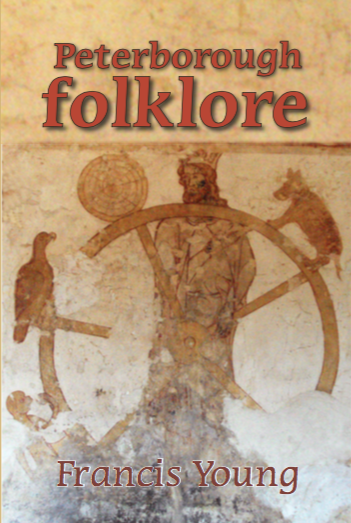
Peterborough Folklore was published by Lasse Press in September 2017. [Out of print]
The city of Peterborough lies at the boundaries of four ancient counties (Cambridgeshire, Huntingdonshire, Lincolnshire and Northamptonshire), a location that has led to the area being ignored by folklorists. However it has an exceptionally rich folklore, which was among the earliest documented in England, by the poet John Clare (1793–1864).
This is the first dedicated study of the tales, customs and traditional lore of Peterborough and its environs. Peterborough is rich in medieval legends, from glimpses of ancient beliefs shrouded in the pagan past like the ‘Wild Hunt’ seen in 1127, to unwise dealings between abbots and the devil, and strange reports of miracles. However, traditional beliefs lingered in the ‘City of the Fens’ well into modern times. Peterborough Folklore offers a fascinating insight into the historic beliefs and culture of the city’s inhabitants. It features holy wells, unofficial folk saints, colourful local festivals, unquiet revenants, ghost-hunting vicars, the ever-present fear of witchcraft – and much more.

The Abbey of Bury St Edmunds: History, Legacy and Discovery was published by Lasse Press in September 2016. [Out of print]
The Abbey of St Edmund was founded around the relics of St Edmund, king and martyr, patron saint of England in the Middle Ages, and grew to be one of the great religious establishments of medieval England. It controlled the adjoining town of Bury St Edmunds, owned vast riches, and its Abbots were major forces in the Church. The Abbey Church was one of the largest in Christendom, and the Abbey hosted kings and parliaments. Among the many influential monks was the poet John Lydgate.
Relations with the town the Abbey dominated and controlled were often far from easy, and at times exploded into violence. A disastrous fire, and the collapse of the great tower, were among the catastrophes the monks had to endure, yet the Abbey became a European centre of art, culture and learning.
In this first complete history of the Abbey from foundation to dissolution, Francis Young draws on a wide variety of sources to explore the development of the Abbey over the centuries, disentangling the complex ruins that surround the surviving churches of St Mary and St James (the Cathedral). He considers the religious and political influence of the Abbots, the Abbey’s wealth and regional power, and the draw of its relics. Five centuries after the Reformation, as the millennium of the Abbey’s foundation in 1020 approaches, its impact on Bury St Edmunds and the country at large is still palpable.
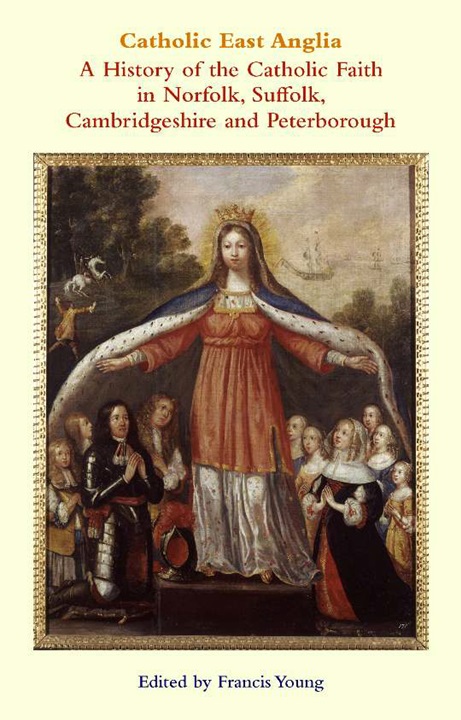
Catholic East Anglia: A History of the Catholic Faith in Norfolk, Suffolk, Cambridgeshire and Peterborough was published by Gracewing in June 2016.
Catholic East Anglia celebrates the fortieth anniversary of the creation of the Diocese of East Anglia out of the Diocese of Northampton in 1976, which gave East Anglian Catholics, for the first time since the Reformation, their own bishop.
However, this book also celebrates over 450 years of the continuous survival of the Catholic faith in East Anglia, after Catholicism was outlawed by Queen Elizabeth in 1559.
Without the witness of the men and women who cherished the Catholic faith during centuries of persecution, discrimination and marginalisation, the present Diocese of East Anglia could never have come into being.
This book tells the story of the Catholics of East Anglia since the Reformation. Some of them have been much studied, others not at all, but their collective story has never before been the subject of a dedicated volume.
A History of Exorcism in Catholic Christianity was published by Palgrave MacMillan in May 2016. An Italian translation entitled Possessione: esorcismo ed esorcisti nella storia della Chiesa cattolica was published by Carocci in September 2018.
This book traces the development of exorcism in Catholic Christianity from the fourth century to the present day, and seeks to explain why exorcism is still so much in demand. This is the first work in English to trace the development of the liturgy, practice and authorisation of exorcisms in Latin Christianity. The rite of exorcism, and the claim by Roman Catholic priests to be able to drive demons from the possessed, remains an enduring source of popular fascination, but the origins and history of this controversial rite have been little explored. Arguing that belief in the need for exorcism typically re-emerges at periods of crisis for the church, Francis Young explores the shifting boundaries between authorised exorcisms and unauthorised magic throughout Christian history, from Augustine of Hippo to Pope Francis. This book offers the historical background to – and suggests reasons for – the current resurgence of exorcism in the global Catholic Church.
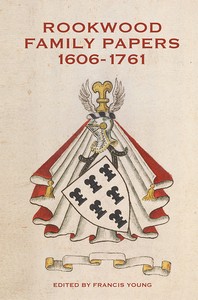
Rookwood Family Papers, 1606-1761 was published by Boydell & Brewer for the Suffolk Records Society in May 2016.
The Rookwoods of Coldham Hall in the parish of Stanningfield, Suffolk, were Roman Catholic recusants whose notoriety rests on Ambrose Rookwood’s involvement in the Gunpowder Plot. In 1606 the owner of Coldham was hanged, drawn and quartered for treason for supplying the plotters with horses. A century later another Ambrose Rookwood suffered the same fate for conspiring to assassinate William III. Tainted by treason, the Rookwood family nevertheless managed to hold on to their estates in Suffolk and Essex, in spite of their Royalist sympathies in the Civil War, the recklessness of individual family members, and later adherence to the Jacobite cause – and even to thrive. As a result, the family left behind a lasting legacy in the form of the Catholic mission founded by Elizabeth Rookwood and her son in Bury St Edmunds.
The documents in this volume tell a remarkable story of resilience, survival and reinvention. They also testify to the Rookwoods’ profound Catholic faith, their patronage of the Jesuits, and their cultural and literary interests. An extensive introduction sets the Rookwoods in their historical and local context.
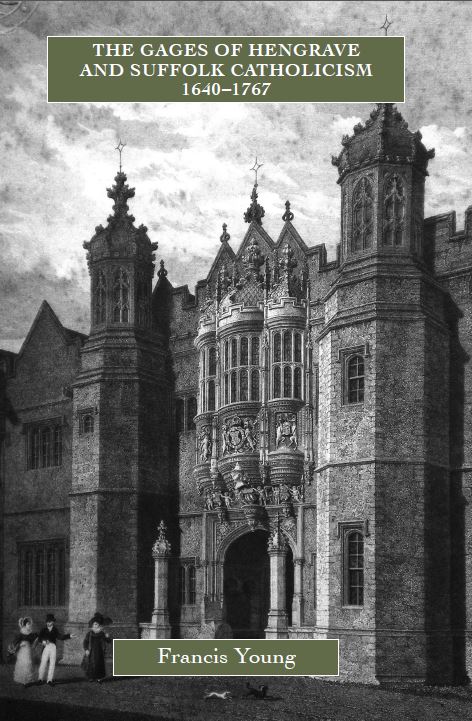
The Gages of Hengrave and Suffolk Catholicism, 1640- 1767 was published by Boydell & Brewer for the Catholic Record Society in June 2015, as part of the CRS’s Monograph Series.
For almost 250 years the Gages of Hengrave Hall, near Bury St Edmunds, were the leading Roman Catholic family in Suffolk, and the sponsors and protectors of most Catholic missionary endeavours in the western half of the county. This book traces their rise from an offshoot of a Sussex recusant family, to the extinction of the senior line in 1767, when the Gages became the Rookwood Gages. Drawing for the first time on the extensive records of the Gage family in Cambridge University Library, the book considers the Gages as part of the wider Catholic community of Bury St Edmunds and west Suffolk, and includes transcriptions of selected family letters as well as the surviving eighteenth-century Benedictine and Jesuit mission registers for Bury St Edmunds. Although the Gages were the wealthiest and most influential Catholics in the region, the gradual separation and independent growth of the urban Catholic community in Bury St Edmunds challenges the idea that eighteenth-century Catholicism in the south of England was moribund and “seigneurial”. The author argues that in the end, the Gages’ achievement was to create a Catholic community that could eventually survive without their patronage.
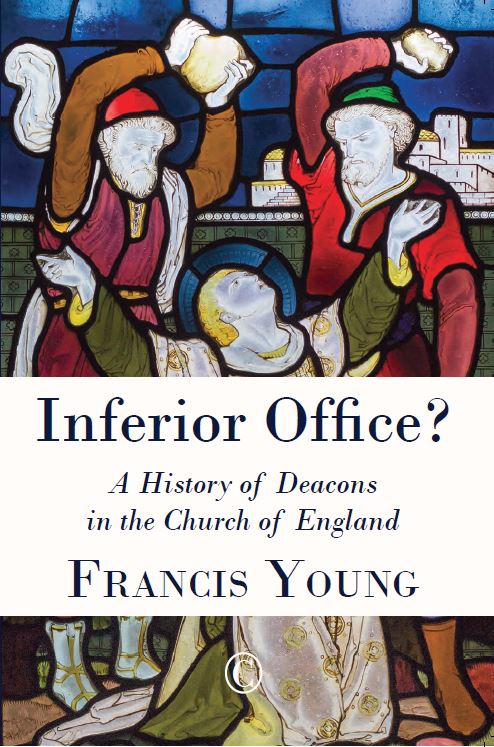
Inferior Office? A History of Deacons in the Church of England was published by James Clarke & Co. in May 2015.
In spite of the centrality of the threefold orders of bishop, priest and deacon to Anglicanism, deacons have been virtually invisible in the contemporary Church of England. Inferior Office? is the first complete history of this neglected portion of the clergy, tracing the church’s changing theology of the diaconate from the Ordinal of 1550 to the present day. Francis Young skilfully overturns the widely held belief that before the twentieth century, the diaconate was merely a brief and nominal period of probation for priests, revealing how it became an integral part of the Elizabethan defence of conformity and exploring the diverse range of ministries assumed by lifelong deacons in the seventeenth and eighteenth centuries. Lifelong deacons often belonged to a marginalised ‘lower class’ of the clergy that has since been forgotten, an oversight of considerable importance to the wider social history of the clergy that is corrected in this volume.
Inferior Office? tells the story of persistent calls for the revival of a distinctive diaconate within the Victorian Church of England and situates the institution of deaconesses and later revival of the distinctive diaconate for women, as well as subsequent developments, within their wider historical context. Set against this backdrop, Young presents a balanced case both for and against the further development of a distinctive diaconate today, offering much for further discussion and debate amongst clergy of the Church of England and all those with an interest in the rich tapestry of its history.

English Catholics and the Supernatural, 1553-1829 was published by Ashgate in February 2013.
In spite of an upsurge in interest in the social history of the Catholic community and an ever-growing body of literature on early modern ‘superstition’ and popular religion, the English Catholic community’s response to the invisible world of the preternatural and supernatural has remained largely neglected. Addressing this oversight, this book explores Catholic responses to the supernatural world, setting the English Catholic community in the contexts of the wider Counter-Reformation and the confessional culture of early modern England. In so doing, it fulfils the need for a study of how English Catholics related to manifestations of the devil (witchcraft and possession) and the dead (ghosts) in the context of Catholic attitudes to the supernatural world as a whole (including debates on miracles). The study further provides a comprehensive examination of the ways in which English Catholics deployed exorcism, the church’s ultimate response to the devil. Whilst some aspects of the Catholic response have been touched on in the course of broader studies, few scholars have gone beyond the evidence contained within anti-Catholic polemical literature to examine in detail what Catholics themselves said and thought. Given that Catholics were consistently portrayed as ‘superstitious’ in Protestant literature, the historian must attend to Catholic voices on the supernatural in order to avoid a disastrously unbalanced view of Catholic attitudes. This book provides the first analysis of the Catholic response to the supernatural and witchcraft and how it related to a characteristic Counter-Reformation preoccupation, the phenomenon of exorcism.
Translations and editions

Royal Blood: The Passion of St Cnut, King and Martyr (Odense: Museum Odense, 2025)
Greene, M. C., The Secret Disclosed: A Legend of St. Edmund’s Abbey (Peterborough: St Jurmin Press, 2019)
James, M. H., Bogie Tales of East Anglia: a Victorian folklore collection (Peterborough: St Jurmin Press, 2019)
