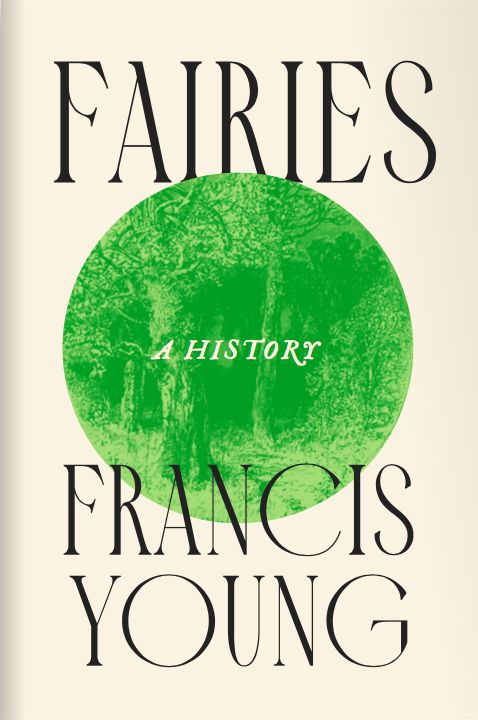
Today sees the publication of my 25th book, Fairies: A History. It is my third book on the subject of fairies, following on from Twilight of the Godlings (2023) and Suffolk Fairylore (2018), but in contrast to those books (whose focus was on Britain and Suffolk respectively), the scope of Fairies: A History is global. It is, I think, the most wide-ranging history of fairy belief attempted in modern times; probably the only comparable history (published over 25 years ago) is Diane Purkiss’s Troublesome Things (2000). Most other books about fairies have confined themselves to a particular region or era, excellent as they are. It remains true, however, that there are many books on fairies – and the potential reader might therefore be justified in asking why another is needed. My answer is in the book’s subtitle: it is a history of fairies, written by a historian and seeking to apply historical methods to humanity’s centuries-long relationship with the fairy realm. In this respect it is dissimilar from Purkiss’s approach; Troublesome Things (which is an excellent book, by the way) is a work of cultural studies and psycho-social criticism whose focus is the history of the fairy theme in culture, literature, art, theatre and so on. My focus is twofold: I am interested in the history of claimed human encounters with fairies as lived experiences, and I am interested in how people came to terms with fairies as part of their worldview – the theorisation of fairies, as it were.
There are many ways to write a book about fairies, and the way I have written this one reflects my own preoccupations and the issues that have come to the fore in my previous books on the subject. There are many accounts of fairy belief that could be written, only some of them by historians. If any theme justifies interdisciplinary analysis, it is this one. But I am a historian, and I have a particular interest in applying historical methods to aspects of religion and belief that many people think could not (or should not) possibly have a history. This was my approach in my earlier book Twilight of the Godlings, in which I set out to tackle a question that scholars had been largely shying away from as unanswerable since the death of Katharine Briggs in 1980: namely, who are Britain’s fairies and where did they come from? This foregrounding of historical questions about the origin of beliefs is at the heart of Fairies: A History too, which is in some respects an expansion of the same project as Twilight of the Godlings and an application of the same approach to a much more ambitious range of evidence.
But the trouble with fairies is that they are terribly elusive; by historical accident, we tend to use the word ‘fairy’ (whose origins lie in England and France) for a whole range of intermediate and ambivalent spirits in folklore and popular belief across Europe, not all of whom are called fairies: trolls, aos sí, huldufólk, nereids, vilas, laumės and so on. Expand the list beyond Europe and it becomes even more bewildering. So one question we can profitably ask is what all of these beings have in common. My answer is that (in Europe at least) they all exist in tension with Christian cosmologies, and therefore have some sort of relationship (good or bad) with Christianity. This is why Christianity is so important to the book: because Christianity (in contrast to Islam) has no officially sanctioned place for these beings, they are unestablished denizens of Christian folk-cosmologies that were either created to accommodate them, or in some sense gave rise to them in the first place. Consequently, it is impossible to trace the origins of fairies without delving deeply into the history of Christianity, and folk-Christianity in particular.
There is a sense in which Fairies: A History is a book I have been trying to write for almost a quarter of a century, perhaps longer. I was abnormally interested in fairies as a child, so perhaps I was always destined to write this book. My interest in spirit-beings returned when I was studying Philosophy at university, and in 2002–2003 I wrote a long book about angels – it wasn’t a very good book, and was never published, but it was an attempt to make intellectual sense of spirit-beings and to write an intellectual history of the idea of angels. Fairies, at the time, felt too much like folklore for me to bother thinking about – I assumed that fairies could not possibly have an intellectual history. But in the 2000s my interest in folklore slowly began to return as I came to realise there were serious scholars writing about this aspect of the history of belief; the key moment was discovering and reading a reprint of The Fairies in Tradition and Literature by Briggs – a casual bookshop purchase whose long-term significance I could not possibly have imagined. In 2006 I first began gathering material for a potential book about fairies in my home county of Suffolk, although I did not really believe I would ever write such a thing – or that it was even possible to do so. I bore the prevailing assumption of the era that the evidence-base either did not exist or had been exhausted by earlier folklorists.
The moment of revelation came in 2018 with the publication of Simon Young and Ceri Houlbrook’s book Magical Folk, a collection of chapters about the fairy lore of different British counties and regions. Simon Young (who is no relation, by the way) is far and away the most important scholar working on British fairy lore, and one of several figures who stands at the heart of a sort of ‘fairy renaissance’ in folklore studies. Jeremy Harte, Ronald Hutton, Michael Ostling, Emma Wilby, Matthias Egeler and Ceri Houlbrook are just some of the scholars who stand alongside Simon Young as important figures in this burgeoning field. Simon Young is so important because he has broken new ground on the evidence-base for the study of fairy lore, and thereby reinvigorated what had seemed in the early 2000s an unconfident and superannuated field. Advances in the digital humanities (such as the digitisation of old newspapers, books and pamphlets) and a renewed emphasis on place-name studies, landscape and archaeology have not only expanded the evidence-base of fairy lore but also make it worthwhile to revisit questions long considered unanswerable, such as the origins of fairies. Furthermore, interpretative paradigms that formerly limited thinking about fairies – such as the looming spectres of the ‘Celtic twilight’ and nationalist preoccupations – have largely been exorcised. And, perhaps most importantly of all, in a post-religious, postmodern Europe the old prejudice against fairies as a serious object of study is breaking down. For the first time, it is possible to give fairies a proper history – and to share that history with a genuinely curious and open-minded reading public.
This is not to say that the study of fairy lore is without its problems. One of those problems is an excessive reliance on evidence from Britain and Ireland. This is partly a legacy of the extreme industriousness of folklorists on these two islands in the 19th and 20th centuries, partly a result of the fact they wrote in English, and partly a lingering legacy of the old idea that fairies are a distinctively ‘Celtic’ phenomenon and thus to be found in Britain and Ireland par excellence. It is a problem that besets almost all books about fairies – including, I must admit, my own – that the narrative of fairy belief is presented as a British and Irish story with occasional vignettes from other nations. In Fairies: A History I did as much as I could to resist this tendency (although, as I argue in the book, Ireland genuinely is central to the history of fairy lore); once again, we have Simon Young to thank for pushing the boundaries of fairy lore beyond its stereotyped heartlands in the volume he co-edited with Davide Ermacora in 2024, The Exeter Companion to Fairies, Nereids, Trolls and Other Social Supernatural Beings. This was a book I worked on as well (I wrote the chapter on Baltic social supernatural beings, as well as indexing the book), and it broke new ground by inviting scholars specialising in widely disparate European regions to write about their fairy traditions (in much the same way as Magical Folk had covered the full gamut of British, Irish and North American fairy lore).
My own twin specialism in British and Baltic folklore allows me to escape the straitjacket of an entirely ‘Hiberno-British’ approach to fairies, although that can create problems of its own – I am conscious that the Baltic region is somewhat marginal when it comes to fairy traditions. But as far as possible, Fairies: A History makes frequent excursions to Iceland, Scandinavia, and Central and Eastern Europe, in addition to the Americas and Australasia. Nevertheless, it is difficult to avoid events in Britain and Ireland structuring the broad outline of any history of fairies: the medieval Romance tradition, the Arthurian mythos, the ‘Celtic twilight’, late medieval conceptions of fairy kingdoms, Shakespearian and stage fairies, the question of how fairy wings developed, Barrie’s Peter Pan, and the contribution of the Cottingley Fairies incident to the development of the ‘global fairy’ are all central to the story of fairies – and they all took place in Britain. But the balance has begun to shift. Matthias Egeler’s Elves and Fairies (2025), which I reviewed here, places a renewed emphasis on Iceland and Germany (although Britain still remains central). Fairies are, slowly but surely, becoming more cosmopolitan. I wonder what history of fairies will be written 25 years from now?

Leave a comment