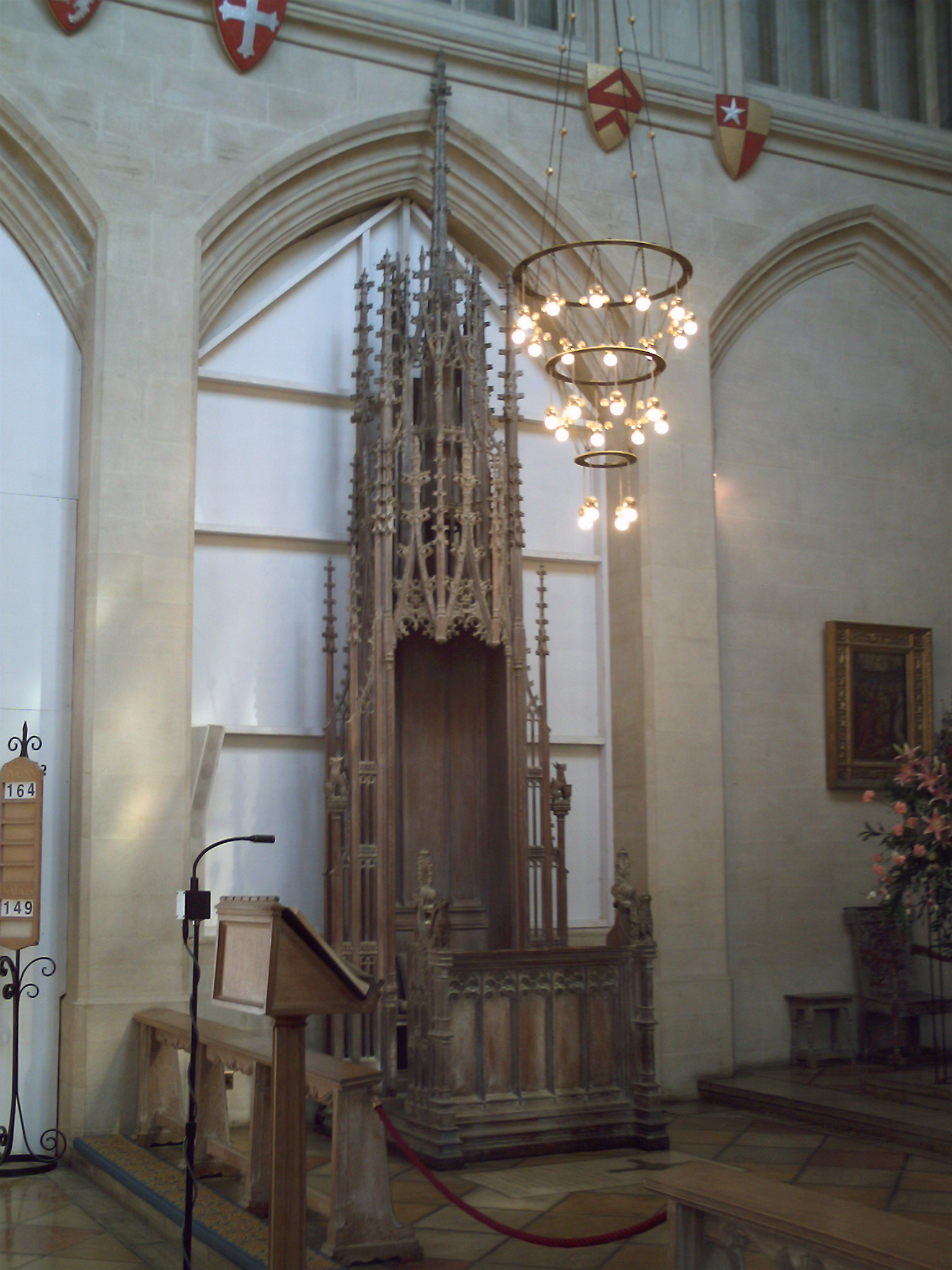
Under the Cathedrals Measure 2021, the task of electing the bishop of a diocese in the Church of England (as laid out in the Appointment of Bishops Act 1533) falls to the College of Canons of the cathedral church – which includes me, since I was appointed a lay canon of St Edmundsbury Cathedral in 2023. Accordingly, the College of Canons will this afternoon elect the Rt Rev. Joanne Grenfell as the 12th Bishop of St Edmundsbury and Ipswich – although sadly I am unable to be there. Nevertheless, the history and form of the rite of election of a bishop warrants some explanation.
The term ‘election’ might seem a somewhat ironic one for a process where there is only one candidate, but ‘election’ in this case means something more like ‘assent’. Once a candidate for a see is nominated, the King issues a licence (known as a congé d’elire) to the College of Canons permitting them to elect a bishop, but the congé d’elire is accompanied by a missive from the King specifying the person to be elected. In a sense, the reason for this rather convoluted process is Magna Carta – rather fittingly in this case, since the blazons of the Magna Carta barons adorn the tower and choir of St Edmundsbury Cathedral, commemorating the oath sworn by the barons on the shrine of St Edmund in 1214. Clause 1 of Magna Carta, which is one of the few clauses to remain in effect, is Ut ecclesia Anglicana libera sit, ‘That the English Church should be free,’ which effectively meant chapters should have the right to elect bishops rather than having them imposed directly by the monarch. This issue had, of course, been a sore point since the time of Henry II and Thomas Becket, and indeed even before.
However, even the barons who drafted Magna Carta did not envisage that there would be no royal involvement in the process of appointing bishops, and although the Henrician Reformation somewhat limited the Church’s independence, the existence of the congé d’elire still preserved the appearance of the Church’s independent authority, if not its political independence from the Crown. The congé d’elire ensures that the election of a bishop is an ecclesiastical act, performed by ecclesiastical persons, even if in fact a single candidate is nominated by royal mandate. However, since all canons are required to swear the Oath of Allegiance upon their appointment (which they do freely), the possibility of any dissent from a royal mandate is obviated.
So, what happens in an episcopal election? It takes place in the cathedral church and it is a legal process, and therefore requires the presence of a Clerk at Law and the Diocesan Registrar as a legal witness, both of whom have to receive the assent of the College of Canons to discharge their duties. The names of the canons taking part in the election are called; they stand in their stalls and confirm their presence, and if any are absent their names are called again. The Dean then reads out a schedule that ‘pronounces contumacious’ any canons who are unlawfully absent, and a second schedule that commands anyone not a member of the College of Canons to depart. The Dean then pronounces the College of Canons quorate, and able to proceed with the election.
The Dean prays for divine guidance at this point, and the congé d’elire is read:
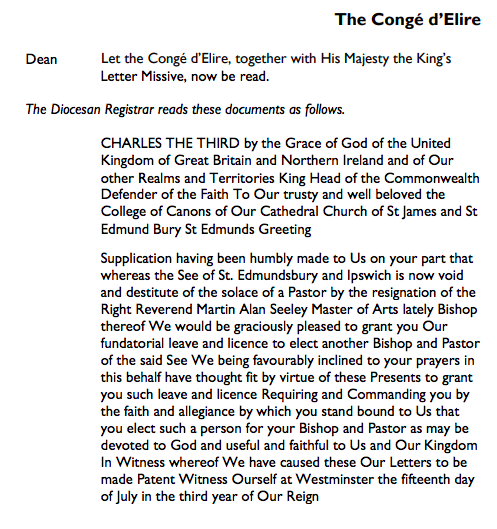
The reading of the congé d’elire is followed by the King’s letter missive:
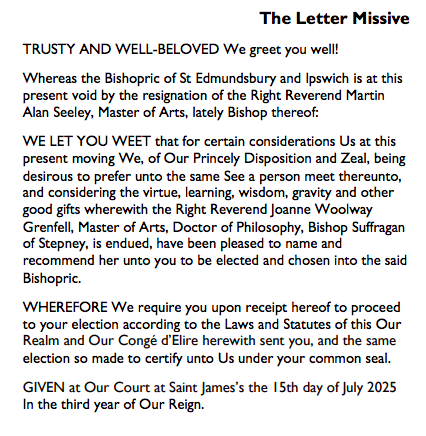
The canons are then asked if they wish to elect the person named as Bishop in accordance with the King’s command, and they confirm their assent. No vote is necessary. The Dean then signs the certificates of election that are to be sent to the King, the Archbishop and the Bishop-Elect for the next stage of the appointment process, which is the confirmation of election, and the Dean reads out a third and final schedule which announces the new Bishop’s election. The role of the College of Canons is a crucial one, because canons and lay canons are generally clergy and laity of the diocese the new bishop will serve, so their election of the bishop serves the role of indicating the diocese’s assent to its new bishop-elect.

Leave a comment