
Today is publication day for my book Poetry and Nation-Building in the Grand Duchy of Lithuania, published by Arc Humanities Press. The volume is an edition and translation of three Latin poems in the epic tradition of the Grand Duchy of Lithuania: Bellum Prutenum (1516) by Joannes Vislicensis, Hodoeporicon Moschicum (1582) by Franciszek Gradowski, and Virtus Dexterae Domini (1674) by James Bennett. In every case, this is the first time the poems have been translated into English. In addition to the translations, the book is a study of the poetic tradition of the Grand Duchy, which argues that a distinctive cultural Lituanitas influenced the creation of such poems: the belief that Latin was the appropriate language for Lithuania’s literature because the Lithuanians were descended from Romans.
I first thought of translating some of Lithuania’s extensive early modern Latin epic literature during the course of translating texts for my earlier book Pagans in the Early Modern Baltic (2022). I initially contemplated Radivilias (1592) by Jan Radwan, widely considered the national epic of the Grand Duchy, but its length seemed to render such a project too ambitious. I began to read other epics from Poland-Lithuania, therefore, and eventually settled upon the work that can be considered the earliest epic of the Jagiellonian realm, written in praise of the Jagiellonian dynasty by the mysterious Kraków poet Joannes Vislicensis in the aftermath of the Battle of Orsha (1514). Bellum Prutenum is the first poem to describe Lithuania, and consists of a poetic re-telling of the Battle of Grunwald in 1410 followed by an account of the marriage of Jogaila to Sophia of Halshany, the ancestor of Sigismund (‘the Old’) for whom the poem was written. The poem is an important cultural document in the Jagiellonians’ negotiation of their ancestral Lithuanian identity and its interaction with their Polish political identity.
My initial intention was to translate Bellum Prutenum alone, but my commissioning editor persuaded me to consider translating two poems. I was unable to decide on a single poem to pair with Bellum Prutenum, however, and in a fit of madness (as it seems to me now) I decided to translate three poems. This decision was motivated, to a large extent, by my discovery of the third poem in the volume, James Bennett’s Virtus Dexterae Domini, which particularly intrigued me because its author was a second-generation Scottish émigré to Lithuania, and because it is apparently the last Latin true epic to have been written in the Lithuanian tradition. The selection of poems thus bookended the Lithuanian Latin epic tradition, with Vislicensis and Bennett. All that remained was to choose a representative poem to embody the height of the epic tradition between its beginning and end points, and for this I chose Gradowski’s Hodoeporicon. The reason for this was primarily the Hodoeporicon Moschicum‘s suitable length and its subject, the Radziwiłł family. The Radziwiłłs patronised or were the subjects of most epic poetry in Lithuania in the late sixteenth century, the height of historical epic in the country that culminated in Radwan’s Radivilias. Gradowski’s Hodoeporicon is especially interesting because it is now the sole historical as well as literary document to record Krzysztof (‘Piorun’) Radziwiłł’s daring raid deep into Muscovy in 1581 during the Livonian War, when Radziwiłł almost captured Ivan the Terrible.

A great Latin epic poet of the Grand Duchy of Lithuania missing from the selection is Nicolaus Hussovianus, simply because Frederick J. Booth has already translated one of Hussovianus’s poems in Arc Humanities Press’s Foundations Series, Song of the Bison (2021). Hussovianus is a crucial figure, however, who tried to take the Polish-Lithuanian epic tradition in a different direction from the classicising Joannes Vislicensis, and his contribution is discussed at length in the book’s introduction. The book also includes as an appendix a ‘bridging’ poem in hexameters from the mid-16th century, which was something of a lacuna in the production of epic poetry: Jan Andruszewicz’s Gens Lituana olim. This was a short poem in honour of medieval Franciscan martyrs inscribed in a Vilnius church (the original monument is now lost), which nevertheless looked forward to the ‘national’ poems of the 1580s and 90s.
The aim of the volume is to present a selection of poems that portray the beginning, middle and end of the Lithuanian Latin epic tradition. These are stages characterised by the Belarusian scholar Zhanna Nekrashevich-Karotkaja as thesis, antithesis and synthesis, although I would prefer to break the development of the tradition into four stages: Joannes Vislicensis’s initial attempt at a Renaissance epic in praise of the Jagiellonian dynasty, Hussovianus’s rejection of that classicising style in favour of more original themes, the development of the ‘historical’ style of epic under Radziwiłł patronage in the Livonian War, and finally the ‘Mannerist’ epic of the second half of the seventeenth century, shading into a fashion for epithalamia and epic-length encomia.
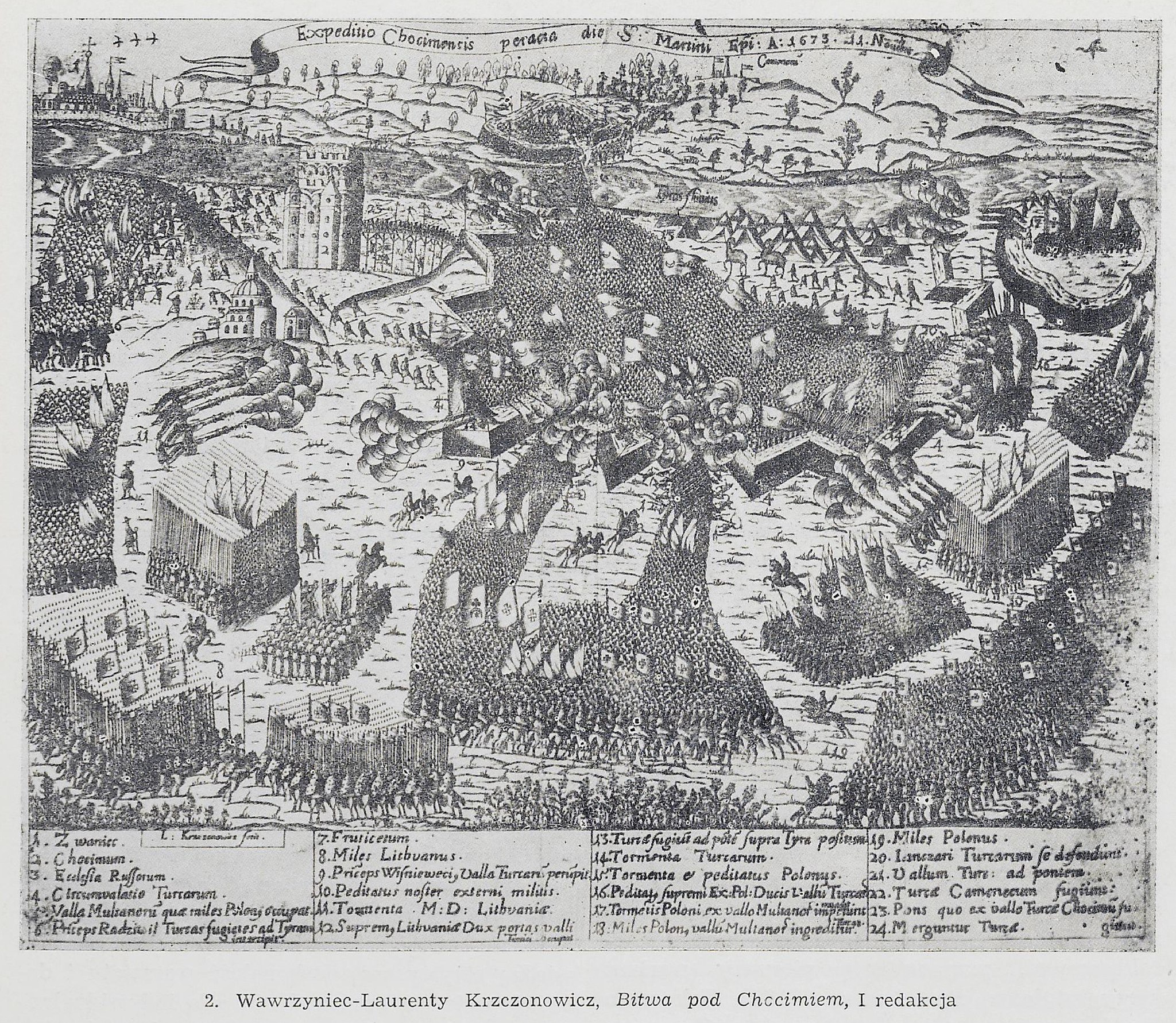
The final epic in the volume, James Bennett’s Virtus Dexterae Domini, is a strange work apparently written very hurriedly in a period of a few weeks after the Polish-Lithuanian victory over the Turks at the Battle of Khotyn in 1674. Its author, the son of one of the Lithuanian commanders (George Bennett) had only just begun his studies at Vilnius University and was still in his teens, leading to speculation that the poem was largely the work of one of his Jesuit masters. George Bennett commissioned the poem, which praised the Lithuanian contribution to the battle and its commanders, especially Michał Kazimierz Pac (1624-82), Grand Hetman of Lithuania.

Although Hussovianus tried to take it in a different direction, Lithuanian Latin epic remained resolutely focussed on the theme of military conflict, and the three epics selected for the volume deal respectively with Lithuanian wars against the Teutonic Knights, the Muscovites, and the Turks. There is also an epic, the Carolomachia, dealing with Lithuania’s conflict with Sweden, which I would have loved to include if I had had the time and space to do so. The importance of war to Lithuanian epics highlights the vulnerability of the Grand Duchy’s geography in a region of East-Central Europe that would always be contested. Wars honed the Grand Duchy’s sense of itself, especially since the Polish Crown and the Grand Duchy of Lithuania raised separate armies, in spite of the Union of Lublin and the sharing of sovereignty in the Polish-Lithuanian Commonwealth. One of the themes of the book is a growing sense of Lithuanian national identity and self-awareness across the 16th and 17th centuries, culminating in the Lithuanian proto-nationalism of Virtus Dexterae Domini. Of course, this nationalism was focussed on the Grand Duchy of Lithuania, a very different entity from modern Lithuania, and the Lithuanian language had very little significance to Lithuanian identity in this era. The Latin language, however, was very significant, owing to the myth of Palemon and the idea that the Lithuanians were descended from Roman soldiers shipwrecked from Julius Caesar’s expedition to Britain and their British captives. This legendary Roman-British origin has a particular resonance in the light of a poet of British descent writing about Lithuanian identity in Virtus Dexterae Domini.
The use of Latin was also a powerful statement of the westernness of the Grand Duchy and its decisive identification with Latin Christendom against Muscovy, which progressively evolved into Lithuania’s bitterest enemy. In spite of the fact that a majority of the Grand Duchy’s people spoke Belarusian (mutually comprehensible with Russian) and followed the Greek rite in worship, Lithuania was everything Muscovy was not. Where Muscovy was Byzantine, Lithuania was Latin; where Muscovy was autocratic, Lithuania was democratic; where Muscovy was Scythian and barbarian, Lithuania was Roman, Sarmatian, and civilised. The Lithuanian nobility went to great lengths to portray Lithuania as a patrician res publica with an elective monarchy analogous to the Roman principate, whose existence did not erase the nation’s republican identity. The patrician res publica was based not on nationality but on merit and loyalty; to be Lithuanian was not to speak a particular language or to follow a particular religion, but to be a free noble citizen who participated in the duties of the Lithuanian bajorai. Lithuanian citizens included Orthodox Ruthenians, Catholic Poles, Muslim Tatars, Presbyterian Scots, Unitarian Hungarians and Jews – while a significant proportion of the Lithuanian peasantry had not yet accepted Christianity and remained pagan.
Ultimately, the Lithuanian epic tradition faded at the end of the 17th century and other forms of Latin literature took its place, and as the 18th century wore on the Latin language itself finally began to lose out to Polish, the lingua franca of most of the Lithuanian nobility. Finally, at the end of the 18th century, a Lithuanian-language literature emerged – and it was no accident that its first (and arguably greatest) product was an epic poem in dactylic hexameters, Metai by Kristijonas Donelaitis. Yet Donelaitis took the form and metre of epic and wrote a pastoral poem that defied epic convention – also a feature of the earlier Latin epic tradition, which was characterised by innovation and experimentation. Lithuanian-language literature owed a great deal to the Latin-language literature that preceded it, even if that debt was not always acknowledge in the Romantic nationalistic ferment of the 19th century, where older literature not in the ‘national language’ was sometimes discounted as irrelevant.
It is my hope that Poetry and Nation-Building in the Grand Duchy of Lithuania will introduce more people than ever before to the literary and cultural riches of early modern Lithuania, a region almost wholly unexplored in English translation.


Leave a comment